

24.39 Classic Photography Fair Attracts Vintage Photography Buyers
Lisa Holden: A More Complex Feminist Path, Exploring Emotion, Identity and Vulnerability
Contemporary Works/Vintage Works Extends Its Holiday Sale Discount of 20% Off until the End of February
A Look Back on 2025: A Slowly Recovering Market, and Losing More Friends
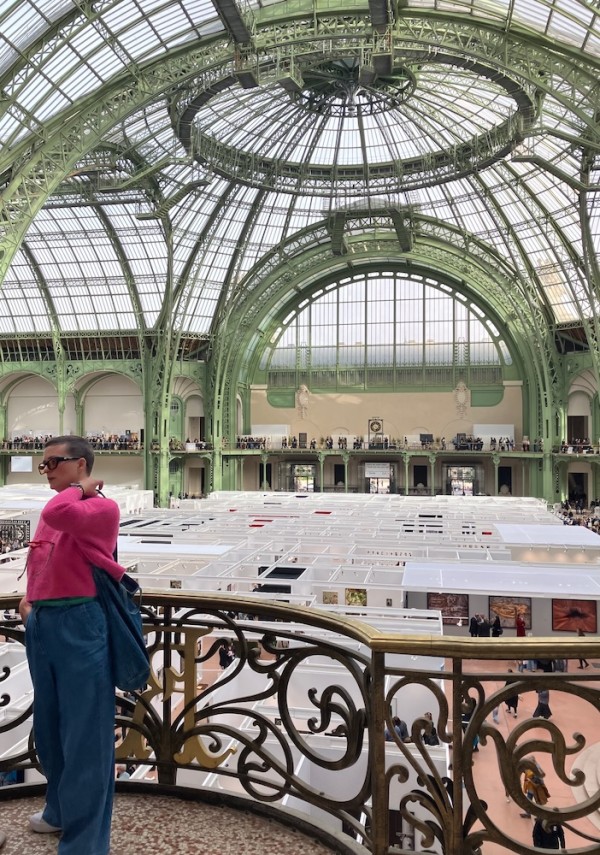
A view of the main floor of Paris Photo from above at the Grand Palais.
In November, the international photography world once again gathered at the Grand Palais for Paris Photo, the leading fair for fine art photography. The 28th edition of the fair brought together 224 exhibitors. A number of reports noted that this was down from last year's edition, which had a whopping 240 exhibitors, describing it as something of a defeat for the fair. I couldn't disagree more. There was simply too much to see last year, making the fair difficult to navigate, especially as previously closed-off spaces, following the refurbishment of the Grand Palais, were used as exhibition spaces.
This year, the fair seemed far more coherent and manageable. Scattered throughout the nave were Prismes projects, including Poggi, Paris, which showed a large exhibition with Sophie Ristelhueber, and Klemm's, Berlin, which showed "Truth Table", an installation by Adrian Sauer. The Voices Sector, separate from the Main Sector last year, was located at the heart of the nave, giving the fair an interesting dynamic.
Last year, the fair was visited by 80,000 people, up 13% from the previous year. This year, the number was 75,000 and some exhibitors thought the drastic increase last year was due to a lot of people simply wanting to see the Grand Palais in all its glory after the refurbishment.
Some long-standing exhibitors were absent this year, and they left some very big holes. Lumière des Roses, always a highlight of the fair, closed down earlier in the year, as did Daniel Blau. Stephen Daiter Gallery, Chicago, Gagosian, International, Gilles Peyroulet & Cie, Paris, and Edwynn Houk, New York, all bailed out this year. There were different reasons for this, I gather but it has been a tough few years for the photography world. The war in Ukraine, followed by the war in Gaza, a shaky art market (though the art auctions had a recent boost), concerns over the economy and a possible AI bubble bursting, as well confusion over Trump's tariffs.
Keeping all this in mind, how did this year's edition go as far as sales were concerned? Many exhibitors reported much better sales than they expected.
As the fair drew to its close on Sunday evening, there was a spontaneous round of applause. Michael Hoppen, London, commented, "It was just wonderful. It used to happen at the Carousel de Louvre in the early years. But what I liked was that the round of applause was not for the dealers or for the artists or for the installers or for the decorators or for the organizers or for the photographers or for the framers: it was for everyone. It's very important to remind people that this fair is a collaborative effort by a very nice group of people who are passionate about photography; artists, framers, installers, painters and the Paris Photo organizers because if just one of those pieces fall, you don't have a fair. This is a very nice community. I don't think you're going to get that at a contemporary art fair where they're all ready to slit each other's throats. It was really wonderful to see and it was totally spontaneous."
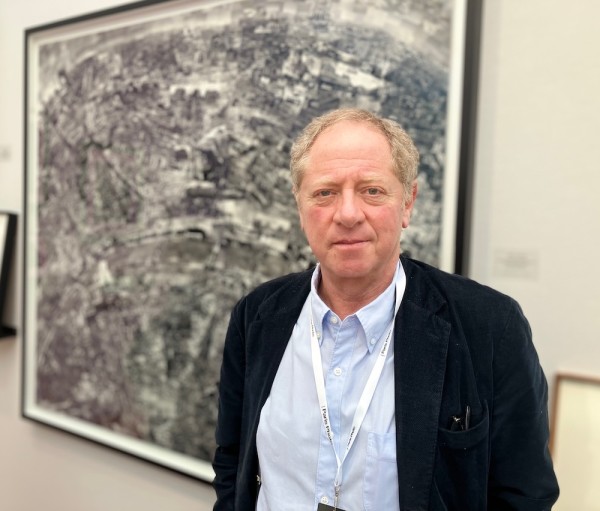
Michael Hoppen had chosen street photography as a theme this year for his booth.
Michael Hoppen had chosen street photography as a theme this year, and there were exceptional works on display, including works by Tod Papageorge, Weegee, Sohei Nishino, Masahisa Fukase, Krass Clement and "Le Maçon Accroupi, Été" by 19th-century photographer Charles Nègre. Hoppen told me. "We sold really well this year, and a lot of the Japanese pictures were bought by The Met and other museums. I'm surprised, however, that the American works didn't sell that well. It's always difficult to predict these things beforehand."
And the Charles Nègre sold. "I bought it at the 2002 Jammes sale in Paris and I could have sold it four times over. Two major museums were extremely annoyed that they were just minutes late. Overall, I think it was a great fair and quality will find buyers."
Last year, Galerie Julian Sander, Cologne, stole the show at Paris Photo by exhibiting ALL 619 prints of August Sander's "People of the 20th Century", on the long wall by the entrance of the Grand Palais. And it worked. Julian Sander, the legendary photographer's grandson, told me, "I sold the set! The whole kit and caboodle, all gone."
This year, Sander had found another way to stand out. "I wanted to do a reset, change people's perception of the gallery, considering last year's success and the presentation did exactly that. The stand was closed off, with an outer wall and inside were not only masterworks of photography but also staff serving coffee and croissants. And people just loved it! Tristan Lund, the British art advisor and curator, used a term from the film Spinal Tap; that last year, I turned it up to 11. And that I had done it again but in a completely different way. On a more serious note, the concept enabled visitors to engage with the works. They weren't distracted by people zipping by. People really spent time looking and it resulted in sales."
Sander had done well. "We sold right across the board, works August Sander, Chargesheimer, Lisette Model, Dr Harold Edgerton, Josef Sudek, Oliver Abraham and others. In addition, we have entered into conversations with several museums and those always take a long time."
As for the long wall by the entrance? This year, it was taken over by Parisian Galerie Poggi, a contemporary art gallery. On show was a powerful selection of works by French artist Sophie Ristelhueber, recipient of the 2025 Hasselblad Award, from no less than eighteen series, including Beirut Photographs, Stitches and Deadset.
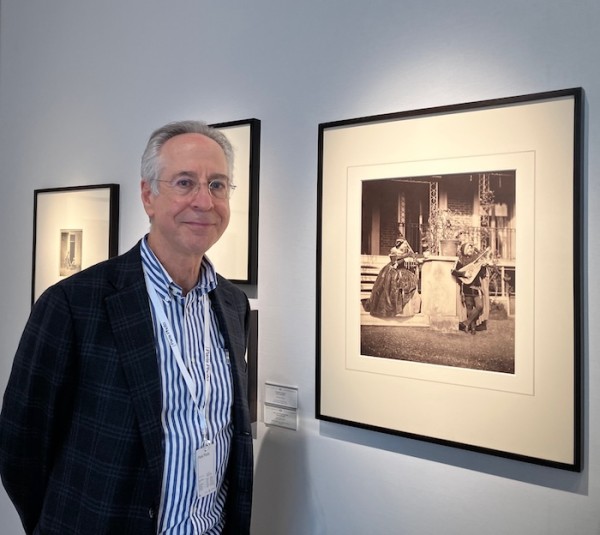
Hans P. Kraus Jr. with Caldesi and Montecchi; The Serenade (Mario and Grisi in Il Trovatore).
Hans P. Kraus, Jr., New York, focused on portraits this year, by French, British and American photographers, including William Henry Fox Talbot, Charles Nègre, Louis-Auguste Bisson and Julia Margaret Cameron, as well as a few related works by contemporary artists, among them a skull by Adam Fuss.
There was also an 1857 albumen print by Caldesi and Montecchi; The Seranade (Mario and Grisi in Il Trovatore). Placed next to it was a small music player and when pressed, it played the serenade from Verdi's 1853 opera. In recent years, Kraus has been accustomed to sales taking place mostly after the fair. Not so this year. "Sales were very good this year. We sold three of the four Cameron prints, as well an important daguerreotype by Southworth & Hawes. There is also interest in a lot of the other works, including a daguerreotype by Bisson and I expect sales in the coming days and weeks. In addition, we sold quite a few of the Durandelle prints of the Paris Opera, fueled perhaps by its 150th anniversary this year. Sadly, The Serenade didn't find a buyer, which just goes to show that music doesn't always do it!"
And Kraus noted a change among the buyers, "They were largely new to us and they were younger than the people we usually sell to. I find that very encouraging for the 19th-century photography market."

Pancho Saula, Galeria Alta, showed the solo work of Carlos Idun-Tawaiah, a Ghanaian artist.
Galeria Alta, Andorra, made its debut at the fair last year. This year, it presented "I'll be here to remind you", a solo show with Carlos Idun-Tawaiah, a Ghanaian artist, photographer and filmmaker. Director Pancho Saula told me, "It's very powerful work and he's only 28 years old. It is inspired by archival images from the African continent, and he seeks to highlight and reimagine its dynamic landscapes, seamlessly weaving together fiction and non-fiction, past and present, memory and imagination. He draws inspiration from his childhood memories of growing up in a Christian Ghanaian home. The images are staged, but in every image there are autobiographical details, like the boy being taught how to use a camera, just as Carlos was taught by his father."
Saula was more than pleased with the response. "It has been overwhelming. The images show a very different side to Africa and they're life-affirming, about joy, love, family and community. A lot of people came to our stand because friends had recommended it. The best moment for me was late Saturday. Most people had left but a gentleman came to our stand. He had never bought a photograph before but bought one of the images. We have sold a lot, not just to collectors but also to dealers and gallerists."
And there was a reason why many were quick to make a decision. Saula explained, "I'm going against the grain. Each image is produced in one size only, in an edition of three plus AP and with many, I'm already into the APs."
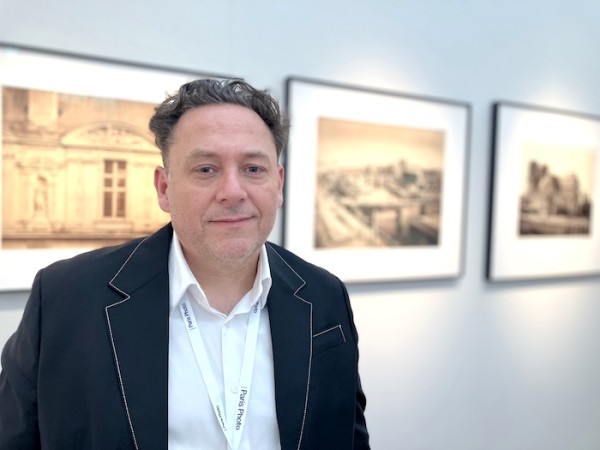
Bruno Tartarin, who has a gallery in the Galerie Vivienne, sold an important Gustave Le Gray of Paris at the show.
Galerie Bruno Tartarin also made his debut last year. Tartarin was pleased with the results this year. "Last year, we showed seascapes by Gustave Le Gray and this year we opted for views of Paris by him, and the most important one, a stunning print, was sold. We also showed other views of Paris, including an extraordinary view of the Eiffel Tower by Gabriel Hoppé in a lightning storm. It was quickly snapped up! As were the contact prints of Picasso's studio by Dora Maar."
Tartarin devoted a section to daguerreotypes and one of them was for me the highlight of the fair, a daguerreotype of a man in a turban, by an unknown photographer. "It hasn't sold yet and it's quite expensive, but there's an option on it and I think it will sell."
IBASHO, Antwerp, started up an additional gallery last year, IN-DEPENDANCE, and had a stand for each next to each other. The latter showed a solo exhibition with British artist Patrick Waterhouse. Annemarie Zethof told me, "The project is called "Restricted Images". Patrick has been working since 2011 with local Warlpiri artists in Australia and it's still ongoing. The work has been shown in many museums, and we felt it would make a beautiful and important part of the fair."
The response had been good Zethof told me. "Visitors have been drawn in by the wall of 32 portraits, and then they discover the monumental works further back. It's a project with many layers and depths and we have achieved great sales."
Sales had also been good at the IBASHO stand. "This year we chose performance as the theme for the presentation. We have sold a lot of works by Sayuri Ichida, a young Japanese photographer who lives in the UK--beautiful works and not that expensive. We have also done well with the other artists, including Akira Sato, Yoshihiro Tasuki, Ikko Narahara and Eikoh Hosoe."
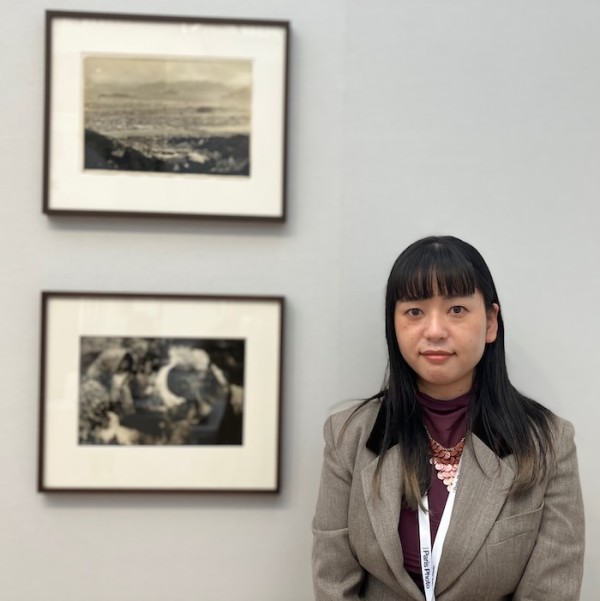
Mizuho Takahashi and the MEM Gallery presented an important student project: "It's called August 6 Hiroshima Day, and it's a collective photography student project that was carried out between 1968 and 1971 by members of the student photography association Zen-Nichi."
There was Japanese photography of a different kind at the stand MEM, Tokyo. This year there have been commemorations to mark the 80th-year anniversary of the atomic bombings of Hiroshima and Nagasaki, but the project presented by MEM was both unexpected and thought-provoking. Mizuho Takahashi told me, "It's called August 6 Hiroshima Day, and it's a collective photography student project that was carried out between 1968 and 1971 by members of the student photography association Zen-Nichi. In 1968, there were violent student protests and many of the students in Zen-Nichi participated in them. Tatsuo Fukushima, photography critic, teacher and curator, told the students that the focus in the protests was too narrow. They needed to look at everything else that was going on in Japan, social and environmental issues, as well as history and the situation in Hiroshima and Nagasaki."
Many of the students, born and bred in Tokyo, had only read about the two cities. Takahashi continued, "When photographers traveled to the two cities, most would focus on the same things; burnt skin and ruins but the students went there again and again and captured much more complex situations. They found that survivors were stigmatized, suspected of being contagious because of radiation. Following the bombings, shanty towns had emerged and then the authorities decided to clear them out without providing housing for people who lived in them. All these complex stories were documented by the students and they were deeply shocked by what they found."
MEM has tried to place the project with Japanese museums. "It's been difficult because of the economic situation in Japan, but we have managed to sell some works here at the fair to private collectors, including one who aims to donate to an institution eventually; and we are also negotiating with a non-Japanese museum at the moment. We had hoped for more sales but we are pleased to have made sales outside Japan."
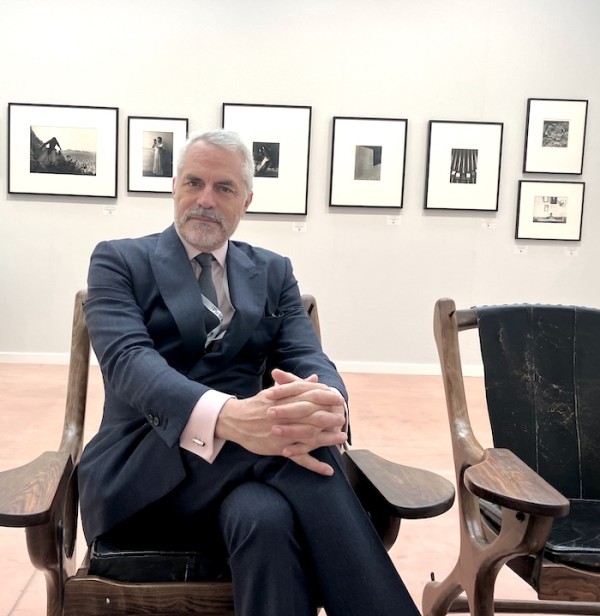
Gregory Leroy brought some very important Mexican works, vintages by Manuel Alvarez Bravo, Lola Alvarez Bravo, Edward Weston, Sheila Hicks, Lazaro Blanco and Graciela Iturbide.
In previous years, Gregory Leroy has shared a stand with Charles Isaacs, but this year, he was showing on his own. In addition to some jaw-dropping prints, he was also offering rare furniture designed by Don Shoemaker.
Leroy told me, "This year has been fantastic in terms of sales, but then I brought some very important Mexican works, vintages by Manuel Alvarez Bravo, Lola Alvarez Bravo, Edward Weston, Sheila Hicks, Lazaro Blanco and Graciela Iturbide. The presentation includes two works by Weston, one shows the pyramid at Teotihuacan, and Charles Isaacs and I sold it eight years ago and the buyer wanted to sell it again. The other one is now sold; it is an image that he took for Anita Brenner and the book she published about Mexican Folk Art, "Idols behind Altars". We sold the Manuel Alvarez Bravo prints, including a vintage of "Portrait of the Eternal", and it's inscribed on the back to the sitter, Isabel Villaseñor. I'm not that surprised that they sold so quickly. Vintage prints of these images are incredibly rare. We also sold the vintage of Iturbide's "Mujér angel". I think, back then, she only made two large prints of each. The vintage of Iturbide's "Magnolia con Espejo [Magnolia with Mirror], Juchitán", I could have sold four times over. It's going to a museum in the US. I have pretty much sold all the important works I brought so I'm extremely happy."
There was poetry at the stand of Rolf Art, Buenos Aires, where Florencia Giordana Braun had brought together Sara Facio (1932–2024) & Alicia D'Amico (1933–2001). Florencia Giordana Braun told me, "They were pioneers who transformed Argentine and Latin American photography. The exhibition revisits three of their seminal photo essays produced in collaboration by La Azotea— the groundbreaking publishing house founded by Facio and D'Amico in 1973, the first editorial house in Latin America dedicated exclusively to photography. Facio and D'Amico's work forged a profoundly humanistic and politically engaged visual language, opening the path for future generations."
One wall at the stand was given over to portraits of intellectuals, writers, people of the Latin American cultural life that Alicia D'Amico took for her 1973 book "Retratos y Autorretratos", interspersed with pages from the book, slightly yellowed. Among them, a portrait of author Julio Cortázar. Not a household name in the photography world, but his short story "Las babas del diablo" was the inspiration for Michelangelo Antonioni's 1966 film "Blowup", starring David Hemmings as a fashion photographer.
Florencia Giordana Braun continued, "Alicia D'Amico gave each of these brilliant minds, Pablo Neruda, Julio Cortázar, Jorge Luis Borges and the others a print of their portraits and in return, they gave her a written self-portrait for the book. It was something of a challenge to bring this historical project to Paris Photo, but we have achieved strong sales, to private collectors as well as institutions. In addition, we also brought work by Adriana Lestido, born in 1955, who was inspired by Sara and Alicia, and we have done well with that also, so we are very pleased."
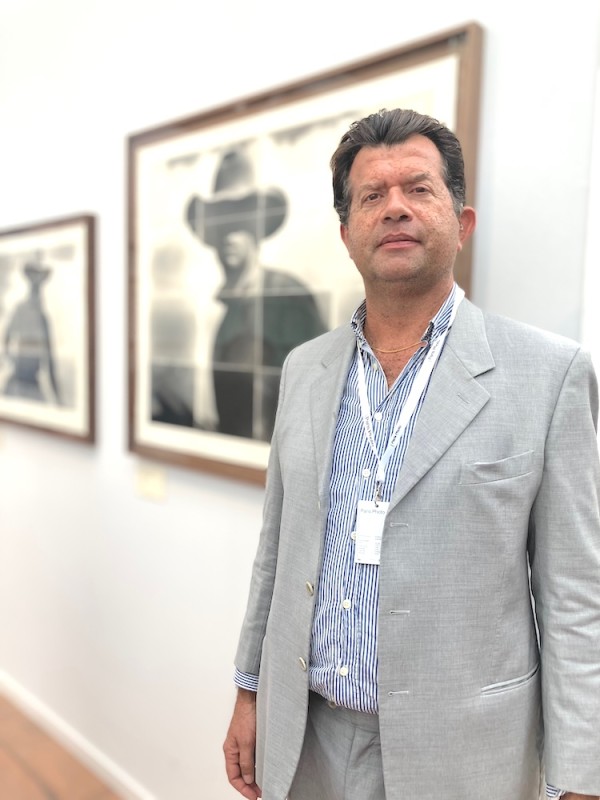
Roland Belgrave, Brighton and Hove, made his debut at the fair.
Roland Belgrave, Brighton and Hove, made his debut at the fair and told me, "I wanted to make a real statement. The presentation explores new ways of looking at photography, in terms of display, methodology, context and proposed future techniques and meaning. Baud Postma, known for his labor-intensive, analogue works, has changed gears with "Death of the Author", by incorporating AI. Postma's choice of subject matter, the cowboy and its connection to the frontier, offers a powerful metaphor for the AI revolution. Also on show, were works by Marie Aurelia Riese and Noelle Mason.
Postma's cowboys were tipped by other exhibitors as surefire winners, but it turned not be so. "When I informed people that it was an AI work, they were put off. I think people still need to adjust to AI work. It will probably take a few years. People seem to think that the artists just trigger ChatGPT and it spits it out. That's not how it works at all! I was shocked that I only sold four. Didn't sell a single work by Marie Aurelia Riese. The big piece by Noelle Mason drew a lot of interest, and there's a museum in Miami that's very keen on it so fingers crossed."
Vintage Galéria, Budapest, is among the veterans of the fair. "We first showed at the fair in 1999 and have done every edition since", Attila Pőcze informed me. This year, we brought two kinds of work; photographers from the interwar years, including André Kertész, Lászlo Moholy-Nagy and Inre Kinszki, and artists working with photography from the postwar era, including Tibor Gáyor, Dóra Maurer and Ákos Birkás."
While the Hungarian photographers who emigrated, among them Brassaï and Robert Capa, are well known internationally, the gallery has done much to bring the lesser-known names before an international audience. Pőcze commented, "It has been a gradual process of building these artists over the years. People come back to us, and they have an ever-deepening knowledge of Hungarian photography. We have done well this year, better than we expected and people were practically queuing to buy the collages by Lászlo Káldor's 1931 'Budapest Diary'."
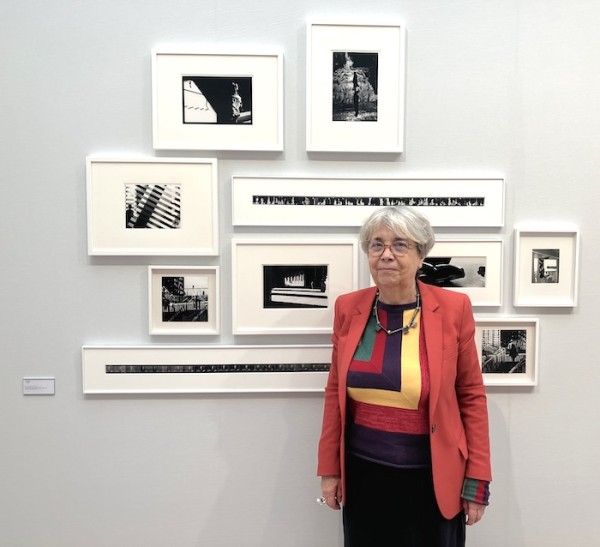
Françoise Morin of Les Douches La Galerie said, "I show the artists that I work with, as well some who have passed away, and I wanted to mix legendary names like Ray K. Metzker and Erwin Blumenfeld with new talent.
I returned to Parisian Les Douches La Galerie several times to see the wonderful display of works by Ray K. Metzker. It was one of the highlights of the fair but there was much else to see, works by Erwin Blumenfeld, Berenice Abbott, Emmanuel Sougez, Denis Roche, Dieter Appelt and others. Françoise Morin told me, "I show the artists that I work with, as well some who have passed away, and I wanted to mix legendary names like Ray K. Metzker and Erwin Blumenfeld with new talent, such as Joël Denot and recent work by the duo Albarrán Cabrera. As for Albarrán Cabrera, I have a show with them at the gallery but I have never shown them here before. so I decided to make a statement and display works by them on the big wall."
Prices ranged from 1500 euros to 62,000, "I feel it's important to have that price range. With all the political and economic turbulence going on in the world right now I was quite concerned before the fair opened but I have done much, much better than I expected and sold 30 prints. The audience here responds to depth and quality."
Richard Saltoun Gallery, founded in London and has since opened galleries in Rome and New York, specializes in post-war art with a particular emphasis on conceptual, feminist and performance artists that emerged during the 1970s. The gallery has been at the forefront of reintroducing and promoting the work of these exceptional artists from the period. Tessa Cranfield told me, "For this edition of Paris Photo, we wanted to show gendered female gallery artists that really pushed the boundaries, such as Helen Chadwick, Eleanor Antin, Stella Snead, Simryn Gill and Penny Slinger, but we are also showing a monumental work by Ulay, entitled "Performing Light". To that we have added works from the secondary market, including works by Valie Export, a wonderful Man Ray."
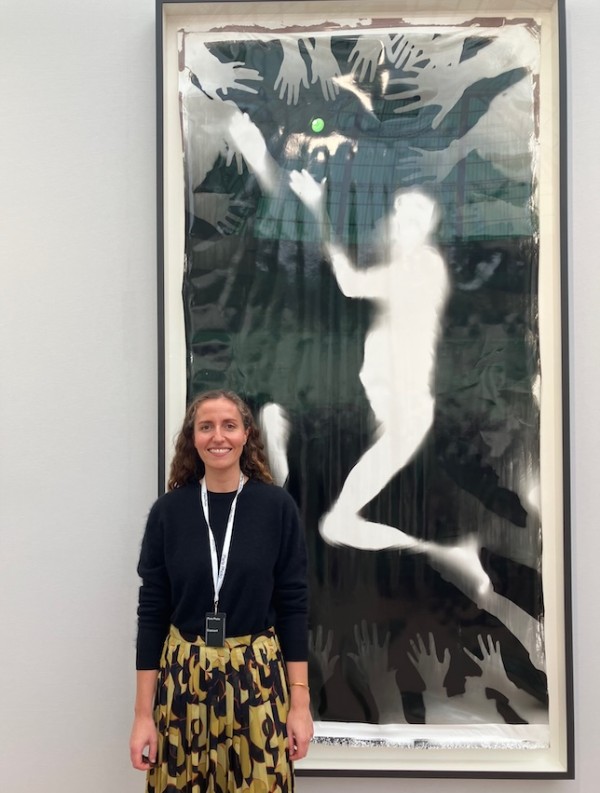
Tessa Cranfield of Richard Saltoun Gallery standing next to a monumental work by Ulay entitled "Performing Light". Ulay is the pseudonym of Frank Uwe Laysiepen.
Reactions had been good, Cranfield told me. "People have liked the mix of historical work with contemporary work. For many visitors, Stella Snead was a new encounter. She was a female surrealist and she is only really being discovered now. As for sales, we have sold right across the board, better than expected, and we have started some great conversations with several institutions, which is another reason why we come. Paris Photo really is the best fair for photography."
Bruce Silverstein, New York, made several significant sales, including photographs by František Drtikol, Robert Frank, Barbara Morgan, Edward Weston and Dorothea Lange. He joked that this year he had less competition for the 20th-century vintage market with dealers like Edwynn Houk, Stephen Daiter and Alex Novak of Vintage Works, Ltd. passing on this year's Paris Photo. But his selection of some wonderful and important vintage icons on the walls of his booth may have had as much to do with his success as anything else.
Earlier this year, Maison Européenne de la Photographie in Paris showed a retrospective with Marie-Laure de Decker (1947 – 2023). A major figure in photojournalism, she traveled through the history of the second half of the twentieth century with her camera, capturing the major upheavals of her era as she met people and made commitments. She made her mark in a largely male-dominated environment, where working as a photographer was--and still is--a real-life choice, driven by passion, adrenaline, risks and renunciations.
At Paris Photo, two Parisian galleries, in camera galerie and Galerie Anne-Laure Buffard, had teamed up to do a solo show with her. The latter gallery also had its own stand right opposite. Anne-Laure Buffard told me, "With the show at MEP, it seemed a good idea to something special here at the fair. As we are a young gallery and the show required a big stand, we decided to join forces with in camera galerie.
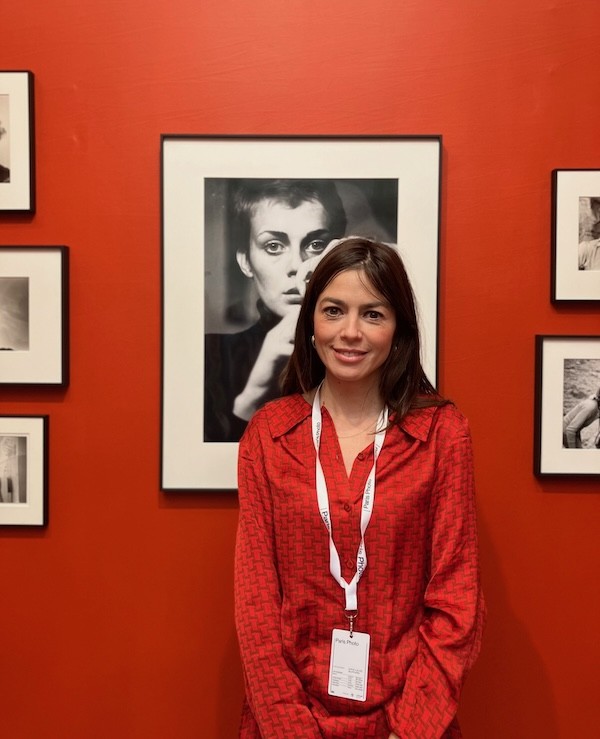
Anne-Laure Buffard. Galerie Anne-Laure Buffard, said, "The response has been just amazing and sales have been super. We sold to museums, as well as private collectors."
"We put the show together with the two sons of Marie-Laure de Decker, going through the archive, selecting works. I think MEP had around 75 000 come to its show. We have had that many people in five days! The response has been just amazing and sales have been super. We sold to museums, as well as private collectors. Having our separate stand so close has been great as our regular clients have had the opportunity to see Marie-Laure de Decker's work, which they might not have been familiar with."
There wasn't time for me to speak to everyone so I'm quoting from the Paris Photo post fair press release. Persons Projects, Berlin, sold an important piece by Zofia Kulik to an institution for more than €200,000. Pace sold several pieces by Paul Graham, six prints by Richard Learoyd, as well as photographs by Josef Koudelka to an institution.
Zander Galerie, Cologne, Paris, sold 22 works by Robert Frank, photographs by Joel Sternfeld and William Eggleston (about €50,000), as well as a piece by Tarrah Krajnak (€25,000). Howard Greenberg, New York, sold a rare portfolio of Roy de Carava to a major private collector, as well as vintage prints by Walker Evans and works by Sarah Moon and Dolores Marat.
A final note. Paris Photo has come a long way. The first edition of the fair was held in 1997, with 53 dealers in a room. Back then, and in the first years that followed, the focus was on classic photography. Gradually, contemporary photography entered the fair. Today, it's the latter that dominates, to the extent that some regard classic photography as an endangered species.
As 2026, marks 200 years since the creation of Nicéphore Niépce's famous image, some felt that this should be celebrated at next year's edition, by grouping the exhibitors of classic photography together in the middle of the Grand Palais, though as one them pointed out, many exhibitors show a mix of classic and contemporary photography. Still, it's an idea.
The 2026 edition of Paris will take place November 12–15 November, with preview on 11 November.
Michael Diemar is editor-in-chief of The Classic, a print and digital magazine about classic photography. In August 2025, he cofounded Vintage Photo Fairs Europe, an organization focused on promoting independent tabletop fairs in Europe and spreading knowledge about classic photography in general. He is a long-time writer about the photography scene, writing extensively for several Scandinavian photography publications, as well as for the E-Photo Newsletter and I Photo Central.
24.39 Classic Photography Fair Attracts Vintage Photography Buyers
Lisa Holden: A More Complex Feminist Path, Exploring Emotion, Identity and Vulnerability
Contemporary Works/Vintage Works Extends Its Holiday Sale Discount of 20% Off until the End of February
A Look Back on 2025: A Slowly Recovering Market, and Losing More Friends


Share This